
- Leaks don't stand a chance.
Water Softeners in Gainesville, FL
We test your water first. Then we size the softener to what the test actually says.
Rather text? Send a photo of the problem to 352-377-9447 and we’ll tell you what it sounds like.

Licensed Florida Plumbing Contractor CFC1430748
Locally owned. We patch every hole we cut. Two year parts and labor warranty, with the manufacturer warranty on top.
Gainesville city water hardness, about 140 mg/L as calcium carbonate.
8.
2
gpg
Flat service fee to come out, waived on larger jobs.
$
69
The iron level where a softener alone stops being enough.
3
ppm
A water softener removes the calcium and magnesium that cause scale, spotting and stiff laundry. Gainesville city water runs about 140 mg/L, or 8.2 grains per gallon, which is moderately hard. Private wells around Alachua and Marion County are usually harder and often carry iron and sulfur too. First Choice Plumbing tests your water free, sizes the right system, and installs it as a licensed Florida plumbing contractor.
- Is your water hard?
Is Gainesville water hard enough to need a softener?
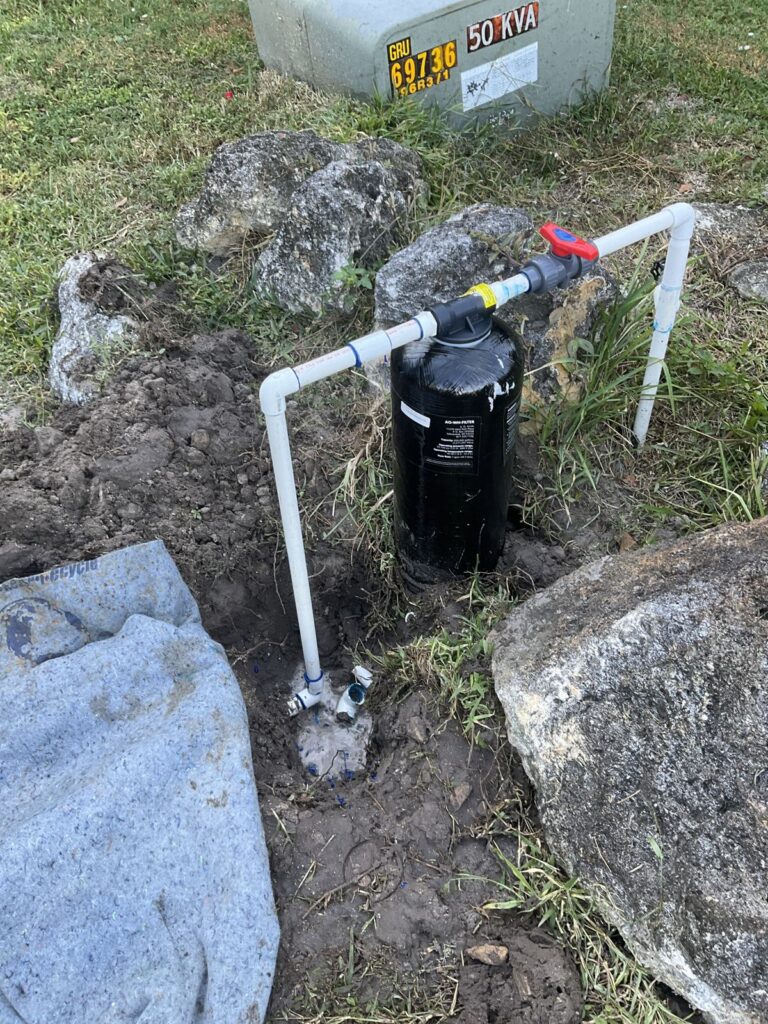
Here is the number nobody else on the first page of Google will give you. Gainesville Regional Utilities reports hardness of about 140 mg/L as calcium carbonate, which works out to roughly 8.2 grains per gallon. On the standard scale that is moderately hard. Not brutal. Not soft either.
That comes down to geology. Gainesville drinks from the Floridan Aquifer, and the aquifer sits in limestone. Limestone is calcium. Water moving through it picks the calcium up and carries it into your house, where it comes back out of solution as scale on anything warm or fast moving.
- Your water heater.
- Your shower head.
- The little screen on the end of your kitchen faucet.
At 8.2 grains, a softener is a comfort and equipment purchase rather than a rescue. You will notice softer laundry, less soap, cleaner glassware, and a water heater that lasts closer to the life it was rated for. That is a fair reason to buy one. It is not an emergency, and we are not going to pretend it is.
Well water is a different conversation. Private wells in rural Alachua, Putnam and Marion County often test well above the city number, and they usually bring friends: iron that stains everything orange, and hydrogen sulfide that smells like rotten eggs. A softener is part of that answer, not the whole of it. There is a section further down that explains exactly where the line is.
Either way, the honest first step is the same. Find out what your water actually is.
- What it costs
What does a water softener cost, installed?
For a standard whole house salt based softener on a home that already has a loop, a drain and an outlet nearby, most installs land in the range of about $1,500 to $3,500 all in. That covers the equipment, the brine tank, the plumbing connections, the bypass and the labor.
What moves the number is almost never the softener itself. It is the house. No existing loop means running new pipe. No drain within reach means adding one. A tight garage corner, a slab run, an outdoor equipment pad that has to be built. Those are plumbing costs, and they are the reason a phone quote is worth exactly what you paid for it.
Well properties usually run higher, because a softener on well water is often the second stage rather than the whole job. If your test shows iron or sulfur, price the pretreatment first and the softener second.
Ongoing, budget for salt. Most households spend somewhere between $50 and $150 a year on it, more if your water is very hard or the system is undersized. That is another reason we size up rather than down.
Our service fee to come out is a flat $69, and it is waived on larger jobs. Will calls it a filter, and he means it in the friendliest possible way. It keeps our schedule clear for people who actually want the work done.
Financing is available on jobs over about $500 if you would rather spread it out. See financing options
- $1,500 to $3,500 installed
- A standard whole house salt based softener on a home that already has a loop, a drain and an outlet nearby.
- $69 service fee
- Flat fee to come out, waived on larger jobs. The water test itself is free.
- Meet the owner
Who is actually showing up?
First Choice Plumbing is locally owned.
- Will Harrod holds the license, Florida Certified Plumbing Contractor CFC1430748, and he still runs the estimates himself.
- Mike handles service and drain calls.
- Ben is the helper who is catching on fast.
- Kim answers the phone and does the dispatching, and she batches jobs by area so nobody is driving Hawthorne to Gainesville and back all day.
That is the whole company, on purpose. Will ran six and seven man crews before and chose to reset and rebuild it tight. It means the person who quotes your softener is the person who is accountable for it.
It also means we are not a water treatment company. We are plumbers who install water treatment, which is why we are as willing to talk you out of a system as into one. If your rotten egg smell is a water heater anode rod, that is a service call, not a $3,000 tank. Residential plumbing
Kindness is the strategy around here. So is telling you the truth on the first visit.
- What hard water costs you
What is hard water actually doing to your house?
Hardness does not break anything overnight. It works slowly, in places you cannot see, and by the time you notice it you have usually already paid for it once.
Your water heater takes the worst of it.
Calcium comes out of solution fastest where water is heated. It settles on the bottom of a tank and coats the element, so the heater works harder, runs longer and gives up sooner than the label said it would.
Fixtures crust over.
Aerators clog, shower heads spray sideways, and the chrome that looked new gets a white film that comes back a week after you scrub it.
Laundry and skin.
Hard water fights detergent, so you use more of it and still get stiff towels. A lot of people who think they have dry skin actually have hard water and too much leftover soap.
Appliances age faster.
Dishwashers and ice makers are full of small passages, and scale is very good at finding small passages.
None of that is a catastrophe. It is a slow tax. The question is only whether the equipment costs less than the tax over the ten years you plan to be in the house, and that is a math question, not a sales question. We will do the math with you.
- Sizing, out loud
What size water softener do I need?
Sizing is not a guess and it is not a secret. It is one line of arithmetic, and you can do it at your kitchen table before anyone knocks on your door.
Take the number of people in the house. Multiply by 75 gallons, which is the standard figure for daily use per person. Multiply that by your hardness in grains per gallon. That gives you grains of hardness per day. Multiply by seven and you have what the system has to handle in a week, which is the number the equipment is actually rated against.
Worked example, a family of four on Gainesville city water:
4 people x 75 gallons
= 300 gallons a day. Take the number of people in the house and multiply by 75 gallons, which is the standard figure for daily use per person.
300 gallons x 8.2 grains
= 2,460 grains a day. Multiply daily gallons by your hardness in grains per gallon. That gives you grains of hardness per day.
2,460 x 7 days
= 17,220 grains a week. Multiply by seven and you have what the system has to handle in a week, which is the number the equipment is actually rated against.
A 24,000 grain system
Covers that with room to spare and regenerates about every five to seven days, which is where you want it.
The same house on a well testing 20 grains
That is 6,000 grains a day and 42,000 a week, and suddenly a 24,000 grain unit is regenerating constantly, burning salt, wasting water and wearing out early. Same family, same house, completely different equipment.
A word on the temptation to buy small
Undersizing is the most expensive mistake in this category. The unit regenerates too often, you buy more salt, the resin works harder, and you end up replacing equipment you already paid to install. If your numbers put you between two sizes, we will tell you to go up, and we will tell you why.
That is why the free test comes first. Two houses on the same street can need different systems, and a company that quotes you a size over the phone is guessing with your money.
- How the install works
How does the install actually work?
We test your water, free.
We come out, pull a sample at the kitchen sink and test it in front of you. Hardness, iron, sulfur. You get the numbers written down and they are yours to keep, whether you hire us or not. If the numbers say you do not need a softener, we will say that out loud.
We size it and price it all in.
Using your hardness and your household size we pick the grain capacity, walk your house for the loop, the drain and the power, and give you one number that includes the equipment, the plumbing and the labor. If you are on a well, we sequence any pretreatment first. If you are on septic, we plan the discharge before anything gets installed.
We install it and stand behind it.
A licensed Florida plumbing contractor does the work, we pull the permit where the jurisdiction requires one, and we set the valve and program the regeneration to your actual water rather than a factory default. Every hole we cut gets professionally patched. Two year parts and labor from us, manufacturer warranty on top, and we show you how to keep salt in it before we leave.
- Plumber, not dealer
The difference is in the details
| What matters | First Choice Plumbing | Typical water treatment dealer |
|---|---|---|
| Who does the work | A licensed Florida plumbing contractor, CFC1430748, licensed to touch every pipe in the house, not just the equipment | An equipment installer whose license may cover the unit and nothing else |
| What comes first | A free water test at your sink, with the numbers written down and left with you | A product presentation in your living room, sometimes with the test used as the opener |
| Product range | Whatever the test calls for, including telling you that you do not need a softener | Whichever system the dealership carries |
| Iron and sulfur | Treated as a separate stage ahead of the softener, priced honestly | Often bundled into one package price with no explanation of what does what |
| Septic properties | Brine discharge planned before install, drain field protected | Standard drain tie in, discharge rarely discussed |
| Permits | Pulled where the jurisdiction requires one | Varies, and it is on you to ask |
| Drywall and holes | We patch every hole we cut, by a professional drywall contractor | Patching is commonly excluded from the quote |
| Pricing posture | A published range, a flat $69 to come out, waived on larger jobs | No numbers until someone is sitting at your table |
| Who you call after | The same local crew, for the softener and for the rest of your plumbing | A service department, and a separate plumber for anything else |
- Salt based or salt free?
What about salt free water conditioners?
Fair question, and the honest answer has two halves.
A salt free conditioner is not a softener. It does not take calcium and magnesium out of your water. What the common type does, using a process called template assisted crystallization, is convert those minerals into tiny crystals that stay suspended instead of sticking to the inside of your pipes and your water heater. Your water is still technically hard. A hardness test after the unit reads the same as before.
So what is it good for? Scale prevention, and that is a real benefit. If your only complaint is crust on the fixtures and you would rather not haul salt or add a drain line, it is a reasonable choice, and it needs almost no maintenance. What it will not give you is the slick feel, the easy lather, the softer laundry or the reduced soap use. Those come from actually removing hardness, and only ion exchange does that.
If soft water is what you are after, buy a softener. If keeping scale off the water heater is what you are after and salt is a dealbreaker, say so and we will price the other path. Either way you are getting our read on it, not a pitch for whatever we happen to stock.
- On a septic system?
Can a water softener drain into a septic tank?
This is the question almost nobody asks before the install, and it is the one that costs the most later.
Every salt based softener regenerates, and when it does it sends salty backwash down a drain line. If that line ties into your septic system, all of it lands in the tank. Florida’s onsite sewage program now recommends that softener brine waste not be discharged into an onsite system at all. The reasoning is straightforward. The extra volume and the salt can upset how solids settle in the tank, and sodium over time can tighten up the soil in the drain field so it stops absorbing the way it needs to. A drain field is the expensive part of a septic system. It is worth protecting.
So if you are on septic, we plan the discharge before we set the tank, not after. Depending on the property that can mean a separate discharge point away from the field, or a different design entirely. We will also tell you when to call the county health department, because rules on discharge vary by jurisdiction and we would rather you hear it from us than from an inspector.
If you are on GRU sewer, this is a much simpler conversation and the standard drain connection is usually fine. Septic services
- Well water, straight talk
Will a water softener fix iron stains and a rotten egg smell?
No. And anybody who tells you it will is about to sell you an expensive lesson.
A softener is built to trade calcium and magnesium for sodium. That is the job. It will pull a small amount of dissolved iron along the way, which is why the myth survives. But iron is hard on softener resin. Once it oxidizes it coats the resin beads in rust, capacity drops, and the tank you paid for stops doing the thing you bought it for.
The rule of thumb the water treatment trade uses is this. Under about 3 parts per million of dissolved iron, a properly maintained softener can generally cope. Above 3 ppm you want a dedicated iron filter ahead of the softener. Above about 7 ppm you are looking at a two stage setup, iron removal first, softening second. Hydrogen sulfide, the rotten egg smell, is a separate problem again and needs oxidation, not ion exchange.
Around here that matters, because the Floridan Aquifer is naturally high in iron and sulfur and private wells are not regulated. Testing is on you as the homeowner, which is exactly why we do it for free.
If your test comes back with iron or sulfur, we will tell you straight. Sometimes the right answer is a softener behind an air injection system. Well water filtration Sometimes it is iron and sulfur removal on its own and no softener at all. Iron and sulfur removal And sometimes the smell is not the well at all. It is the anode rod in your water heater, and that is a cheap fix we will happily point you to instead of selling you a tank. Water heaters
- FAQ
Water softener questions we get asked every week
Gainesville Regional Utilities reports about 140 mg/L of hardness as calcium carbonate, which is roughly 8.2 grains per gallon. That is moderately hard. Private wells in rural Alachua, Putnam and Marion County usually test higher and often carry iron and sulfur as well, which is why we test before quoting anything.
Multiply the people in your house by 75 gallons a day, multiply that by your hardness in grains per gallon, then multiply by seven. That is your weekly grain load. A family of four on Gainesville city water needs about 17,000 grains a week, which a 24,000 grain system handles comfortably. Well water changes the answer completely.
No. That smell is usually hydrogen sulfide and it needs oxidation, not softening. Sometimes it is not the well at all and it is the anode rod in your water heater. We test first and tell you which one you have before anyone spends money.
Only a little. Under about 3 parts per million of dissolved iron a well maintained softener generally copes. Above that, iron fouls the resin and capacity drops, so you want a dedicated iron filter ahead of the softener. Above about 7 ppm it is a two stage setup.
No. A salt free conditioner does not remove hardness. It changes the minerals so they do not stick to your pipes and water heater, which prevents scale, but your water stays technically hard and you will not get the softer laundry or the easier lather.
Florida's onsite sewage program recommends that softener brine not be discharged into a septic system, because the salt and the extra volume can upset the tank and tighten the soil in the drain field. If you are on septic we plan the discharge before we install, and we will tell you when to check with the county health department.
In Alachua County a permit is required to alter, repair, remove, convert or replace a plumbing system, and a water treatment install can fall under that depending on the work and the jurisdiction. Unincorporated county work permits through Alachua County Growth Management, and city addresses permit through their own building office. We handle it where it is required.
Most households spend somewhere between $50 and $150 a year on salt. It depends on your hardness, your water use and whether the system is sized right. An undersized softener regenerates too often and burns through salt, which is one of the reasons we size up when the numbers are borderline.
Licensed Florida Plumbing Contractor
CFC1430748, licensed to touch every pipe in the house, not just the equipment.
Flat $69 to come out
Waived on larger jobs. The water test itself is free.
Two year parts and labor
With the manufacturer warranty on top.
We patch every hole we cut
By a professional drywall contractor.
- Where we work
Where do you install water softeners?
We are based in Hawthorne and we work across North Central Florida, city water and well water both.
Gainesville | Hawthorne | Alachua | High Springs | Newberry | Archer | Jonesville | Micanopy | Waldo | La Crosse | Melrose | Keystone Heights | Interlachen | Starke | Brooker | Lake Butler | Williston | McIntosh | Citra | Anthony | Sparr | Fort McCoy
Counties: Alachua, Marion, Putnam, Clay, Bradford, Union and Levy. See all service areas
If your town is not on the list, call anyway. We would rather tell you yes or point you to somebody good than leave you guessing.
7counties served
22towns with local pages
Hawthornehome base
- Service county
- Town page
- Home base
Select any county or town to open its page.
Don’t see your town? We likely still come out — call 352-377-9447
- Start with the test
Find out what is in your water before you spend a dollar
The test is free, it takes a few minutes, and you keep the numbers either way. If a softener is the right call we will size it to your water and give you one all in price. If it is not, we will tell you that too, and we will point you at the fix that is. Book a free water test online
Licensed Florida Plumbing Contractor CFC1430748. Flat $69 to come out, waived on larger jobs. Two year parts and labor. We patch every hole we cut. Leaks don’t stand a chance.
- Leaks don't stand a chance.
Tell us what's going on and we'll take it from there
You get a real person, a $69 visit, a flat price before we start, and a company that patches what it cuts and answers the phone when you call back. If a smaller fix is the right call, we’ll tell you that too.

First Choice Plumbing is a locally owned, owner led plumbing company working Gainesville, Hawthorne and Greater Alachua County. Leak detection, repipes, water heaters, drains, trenchless lining, well water filtration and septic. We find it, we fix it, we guarantee it.
Florida Certified Plumbing Contractor CFC1430748
Explore
Services
-
First Choice Plumbing
6940 SE 221st St
Hawthorne, FL 32640 - Office Mon to Fri, 8 to 5. Emergency line 24/7.
Copyright © 2026 First Choice Plumbing Inc. All rights reserved. FL Certified Plumbing Contractor CFC1430748.
Proudly Building Legacy with Legacy Sales Engineering